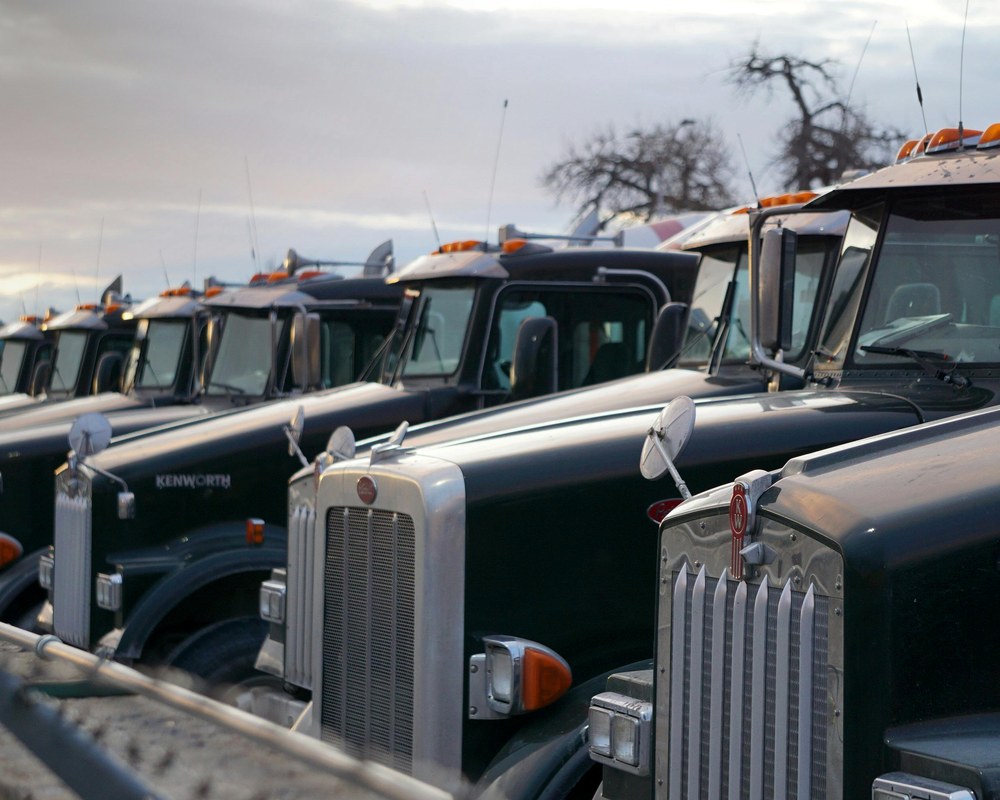
Turn movement data into faster, cheaper, more reliable operations — route and load optimisation, predictive fleet health, and shipment intelligence end to end.
Logistics runs on tight margins and relentless variability: traffic, weather, capacity, demand swings, and the disruption that arrives without warning. Every operator already sits on a stream of telematics, order, and tracking data — the edge goes to whoever turns it into better decisions, faster, across a network that never stops moving.
AI is well suited to exactly these problems. Routing and load planning are optimisation at their core; ETAs and demand are forecasting; fleet failures are predictable from telematics; and the exceptions that consume planners' days can be triaged and often resolved by agents reasoning over order state, policy, and constraints.
We build to connect planning, execution, and the customer-facing layer — so an optimised plan survives contact with reality, disruptions are handled proactively rather than after the complaint, and the shipment-status questions that flood support resolve themselves.
Six high-value use cases, each mapped to the AdeptivIQ capability that powers it.
Plan routes and loads against capacity, time windows, and real-world constraints — and re-optimise as conditions change — to squeeze cost and miles out of every run.
Learn the telematics signatures that precede breakdowns and schedule service before a vehicle strands a load on the road.
Forecast arrival times and shipment demand from historical and live signals — so promises are reliable and capacity is planned, not scrambled for.
Monitor shipments end to end, reason through disruptions and constraints, and take or recommend the next best action — turning exception-handling from a fire drill into a workflow.
Apply vision to receiving, sortation, damage detection, and dock operations — speeding handling while improving accuracy across the warehouse.
Resolve tracking, delivery, and exception questions through self-service chat — deflecting the highest-volume contacts before they reach an agent.

A perfect route plan built the night before is worthless by mid-morning when a road closes, a customer reschedules, and a truck goes down. The cost of logistics isn't really in the plan — it's in how badly the plan survives the day.
We close the loop between planning and execution. Optimisation builds the route and load; predictive maintenance keeps the vehicle in service; forecasting sets honest ETAs; and an exception agent watches the network in real time, reasoning through disruptions and triggering the right reroute, reassignment, or proactive customer notification before a planner has to intervene.
The plan adapts instead of breaking — which shows up as lower cost per mile, higher on-time performance, and far fewer of the fire drills that consume a planning team.
Each use case above is powered by one or more of our core capabilities.